

Disclosure: Some links may contain referral links and I may be compensated for this at no additional cost to you.
Ever dreamt of generating passive income from your creativity? The world of puzzle books on Amazon KDP (Kindle Direct Publishing) might be your perfect fit! It’s a thriving niche, offering a fantastic opportunity for anyone looking to self-publish engaging content without needing to write a novel.
In this blog post, we’ll dive deep into how you can create and sell your own puzzle books, optimized for success on Amazon.
Why Puzzle Books on Amazon KDP?
The demand for puzzle books – from Sudoku and Word Searches to Mazes and Crosswords – remains consistently high. People of all ages love to challenge their brains, unwind, and have fun with these engaging activities.
Amazon KDP makes it incredibly accessible to publish these “low-content” books, handling the printing, shipping, and customer service, so you can focus on creation.
The appeal is clear:
* Low Barrier to Entry: You don’t need to be a seasoned author. The focus is on design and puzzle generation.
* Evergreen Demand: Puzzles are timeless.
* Passive Income Potential: Once published, your book can sell repeatedly with minimal ongoing effort.
* Scalability: Create a series, diversify your puzzle types, and expand your catalog.
Step-by-Step Guide to Puzzle Book Success
1. Niche Down & Research Your Market (Keyword Research is Key!)
This is perhaps the most crucial step for KDP success. Simply creating a “Sudoku book” isn’t enough. You need to find profitable niches within the puzzle book category.
* Think specific audiences: “Large Print Sudoku for Seniors,” “Word Search for Cat Lovers,” “Mindfulness Mazes for Teens,” “Crosswords for History Buffs.”
* Utilize Amazon’s Search Bar: Start typing general puzzle terms and see what suggestions pop up. These are actual customer searches!
* Analyze Best Sellers: Look at what’s already selling well. What themes, difficulty levels, and puzzle types are popular?
* Leverage Tools: Tools like Publisher Rocket or Book Bolt can provide invaluable data on search volume, competition, and estimated sales for specific keywords and niches. Aim for niches with decent demand and lower competition (e.g., less than 10,000 competing books).
Keywords to consider for your listing:
* Main puzzle type (e.g., “word search,” “sudoku,” “crossword”)
* Target audience (e.g., “for adults,” “for kids,” “for seniors,” “for teens”)
* Theme (e.g., “animal,” “travel,” “mindfulness,” “history”)
* Difficulty level (e.g., “easy,” “medium,” “hard,” “expert”)
* Specific features (e.g., “large print,” “solutions included,” “travel size”)
2. Create Engaging Puzzle Content
Once you’ve identified your niche, it’s time to create the puzzles!
* Software & Tools: There are numerous online puzzle generators and software specifically designed for KDP creators (e.g., Book Bolt, Puzzlebook.co). These can significantly speed up the process.

* Variety is Good: While focusing on a niche, you can still offer a good number of puzzles within your chosen type. Consider including solutions at the back of the book.
* Quality Matters: Ensure your puzzles are well-formatted, legible, and error-free. A poor-quality interior will lead to bad reviews.
* Unique Touch: Can you add a unique element? Themed backgrounds, interesting intros, or a “certificate of completion” can make your book stand out.
3. Design a Captivating Cover
Your book cover is your storefront on Amazon. It needs to be eye-catching and clearly convey what your book is about.
* Professionalism: Invest time in creating a high-quality cover. Avoid “AI slop” or amateurish designs.
* Niche-Specific: The design should resonate with your target audience. For instance, a children’s puzzle book will have a very different aesthetic than one for seniors.
* Readability: Your title and subtitle should be clear and easy to read, even in a small thumbnail.
* Keywords on Cover: Consider incorporating relevant keywords into your title or subtitle on the cover itself.
* Visual Representation: Include a visual hint of the puzzle type (e.g., a small Sudoku grid, a snippet of a word search).
* Color Scheme: Choose colors that are appropriate for your niche and stand out.
* Utilize KDP Templates: Amazon KDP provides templates for cover dimensions, ensuring your design fits perfectly.

4. Craft an Optimized Amazon KDP Listing
Your book’s product page is where customers decide to buy. Optimize every element for discoverability and conversion.
* Compelling Title & Subtitle: Include your main keywords in a natural, appealing way. The subtitle is a great place for more descriptive keywords.
* Detailed Description: Highlight the benefits of your puzzle book. What makes it unique? Who is it for? Use bullet points for readability.
* Keywords (7 Backend Slots): These are crucial for Amazon’s search algorithm. Use all seven slots, filling them with relevant, high-traffic keywords you identified in your research.
* Categories: Choose the most appropriate categories to ensure your book appears in relevant searches.
* “Look Inside” Feature: Make sure your interior is well-formatted and visually appealing, as customers will often preview a few pages.
5. Pricing & Royalties
Research competitive pricing within your niche. Puzzle books typically fall into the lower price range (e.g., $5-$10). KDP offers different royalty rates depending on the price and format (paperback vs. hardcover).
6. Marketing & Promotion (Beyond KDP)
While KDP offers discoverability, a proactive approach to marketing can significantly boost sales.
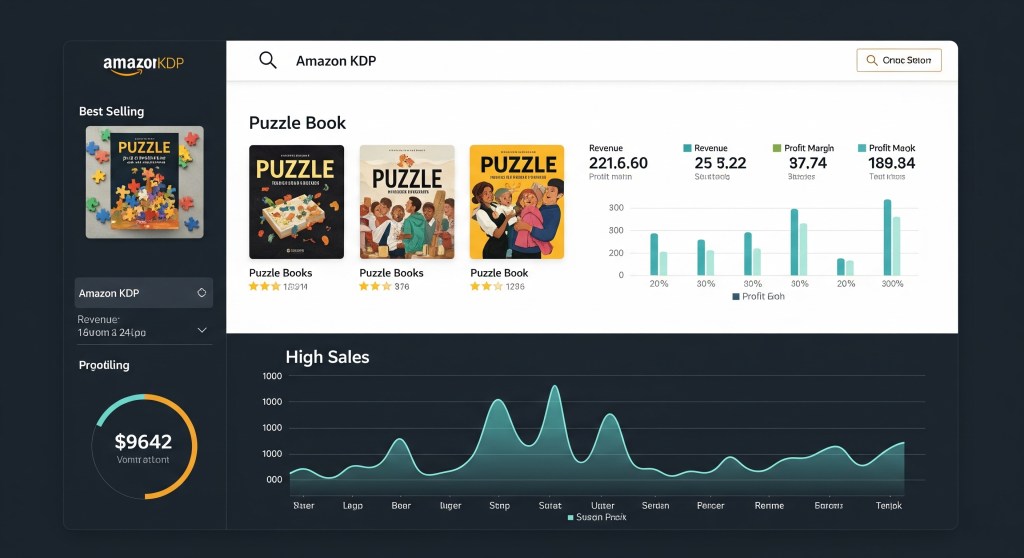
* Amazon Ads: Consider running targeted Amazon Ads to increase visibility, especially when launching a new book or during peak seasons.
* Social Media: Promote your books on platforms where your target audience hangs out. Share snippets, behind-the-scenes, or even mini-puzzles.
* Build an Author Platform: A simple website or blog can help establish your brand and drive traffic.
* Encourage Reviews: Positive reviews are vital for social proof and Amazon’s algorithm.
Is It a “Get Rich Quick” Scheme?
No. While the potential for passive income is real, it requires effort, research, and consistent creation. The KDP low-content market has become more competitive, so finding underserved niches and producing high-quality, unique books is more important than ever.
Start Your Puzzle Empire Today!
Creating puzzle books on Amazon KDP is a rewarding venture for those who enjoy design and problem-solving. By focusing on solid niche research, quality content creation, and strategic optimization, you can unlock a fantastic stream of passive income and bring joy to puzzle enthusiasts worldwide.
Ready to start puzzling your way to profits? Share your thoughts and questions in the comments below!
 App Site Make Money